History of the Internment Camps

"A viper is nonetheless a viper wherever the egg is hatched- so a Japanese-American, born of Japanese parents- grows up to be a Japanese, not an American.” 

-Los Angeles Times, February 2, 1942 

If making one million innocent Japanese uncomfortable would prevent one scheming Japanese from costing the life of one American boy, then let the million innocents suffer… personally, I hate the Japanese and that goes for all of them.” 

- Henry McLemore, columnist 
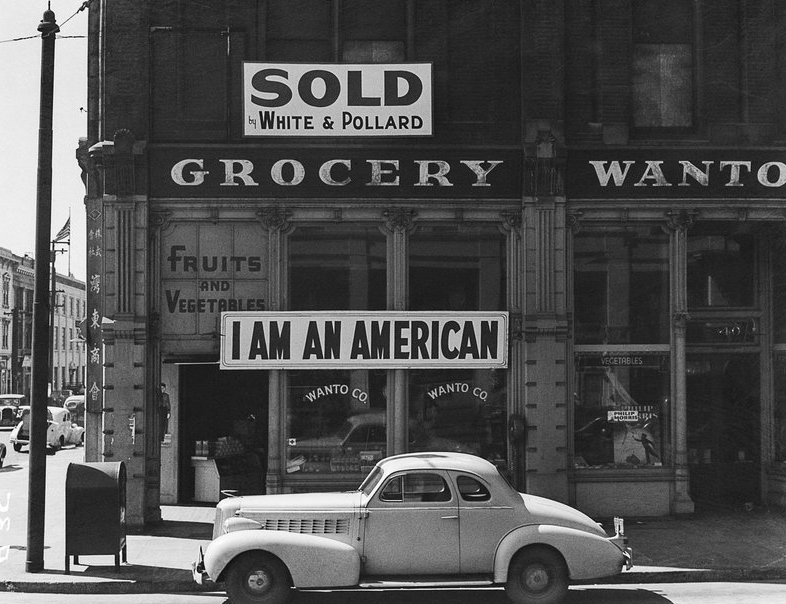
Photos courtesy of Dorothea Lange and Russell Lee

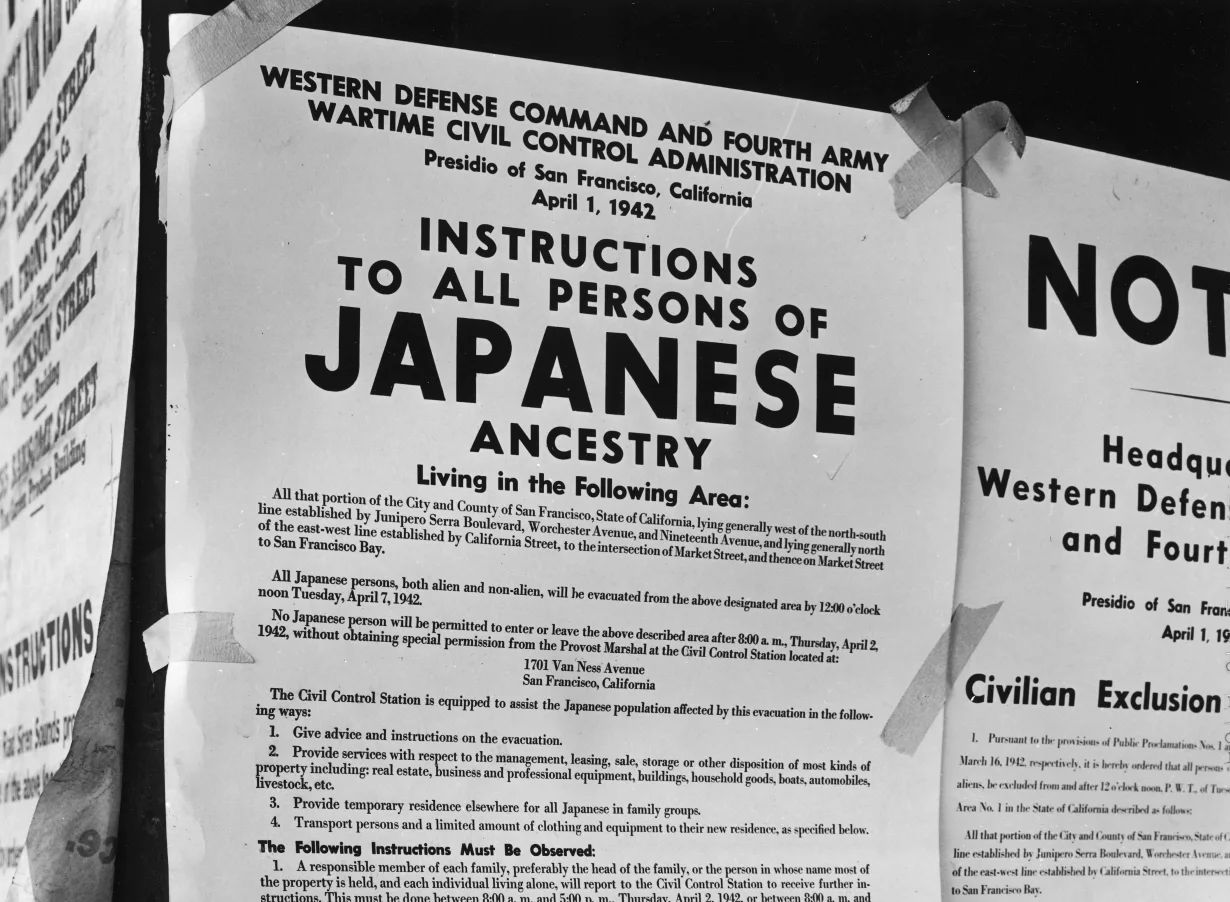
The surprise attack on Pearl Harbor by the Imperial Japanese Navy Air Service on December 7, 1941, a very successful execution of destruction, instilled and amplified the fear in Americans of people of Japanese descent. Anyone of Japanese heritage was suddenly looked on with suspicion and fear despite being American citizens, most of whom had even been born in the United States. Within 48 hours, many were arrested, bank accounts were frozen, business funds were handed over to the government, and Japanese families had to turn in radios and cameras, taking to destroying their possessions that connected them to their heritage (Lee 212). Throughout the war, Japanese, German, and Italian nationals became “enemy aliens”; however, only the Japanese were interned. After the attack, racist propaganda took off, influencing blame and discriminatory rhetoric against those of Japanese descent; the media spread false propaganda that claimed the Japanese Americans had conspired with Japan and helped with the attack. Within one month after Pearl Harbor, the support for removal and mass incarceration of the Japanese Americans spread across the country. While some felt blindly protected by their American identities, others were more skeptical of the country that was quickly turning its back on them. On February 19, 1942, President Franklin Delano Roosevelt signed Executive Order 9066, granting the movement to “evacuate” all persons of Japanese ancestry (up to 1/16th). He had ignored reports from the Justice Department, FBI, the Office of Naval Intelligence, and his own hand-picked investigators that said the mass removal was unnecessary; the decision was not put before Congress and gave the army the power to exclude whomever it saw fit under the guise of “military necessity” (Lee 225). Armed with the signed EO by President Roosevelt, General DeWitt immediately ordered the West Coast to be cleared of all Japanese Americans. 120,000 Japanese Americans were removed from their homes, 80% on the West Coast, and were summarily rounded up with no charges or trial. Once the evacuation orders were posted, the residents had one week to prepare for removal; families scrambled to make arrangements, sell their businesses, etc.

Located in desolate deserts or swamplands throughout the West Coast and Arkansas, the ten “relocation centers” were lined by barbed wire fences and tall towers where guards stood with guns pointed down at the prisoners. The inmates lived without privacy in “crude, incomplete, and ill-prepared” camps in blocks of barracks that smelled of horse, often with around ten people to one small room (Lee 229). Due to the minimal time the families had to prepare for relocation, the only belongings they were allowed to bring  were those that they could carry. They did what they could with what they had and made their own beds out of straw and scrap bags. Inadequate medical facilities and a lack of proper health care complicated the lives of the internees further, making it that much harder to raise children- or even have children- within the confines of the barbed wire fences. Within the War Relocation Authority camps, the cultural patriarchy and structure of most Japanese families was broken down due to communal life that saw children spend nearly all of their time with other kids in the camp rather than with family and WRA policies that favored American-born Nisei over their Issei parents. The WRA attempted to create communities of inmates who were self-sufficient, establishing schools and recreational activities. The internees formed groups and made a concerted effort at living as normal a life as possible within walls, taking on most of the work to keep the camps running, from preparing and serving meals in the mess halls to cleaning and cutting down trees for wood to build more barracks. Besides basic human needs that were complicated in the internment camps, the lack of freedom also cultivated a very boring environment; the internees sought any kind of outlet for creativity. In an attempt to beautify their surrounds and make their baren surroundings a home, the inmates furnished the barracks, planted gardens, and made a wide variety of furniture and decorative items for their units using materials found throughout the camps (Hirasuna 34). However, at the end of the day, the reality of their imprisonment still held them back from true contentment or satisfaction with their environment. Art, photography, and literature also became ways to maintain a sense of self and pass the time during the years of the war. 

The Japanese were living behind fences, yet they were also sought after to fight for the very country that put them there. While the vast majority of Japanese Americans decided to obey the exclusion orders, a few chose to challenge certain aspects of the exclusion. The cases of three such challengers- Gordon Hirabayashi, Fred Korematsu, and Minoru Yasui- ended up going all the way to the Supreme Court, but the Court ultimately upheld the legality of the racially-based exclusion (Lee 237). After some unrest in the camps during the fall of 1942, the WRA instituted a questionnaire in order to separate the “loyal” from the “disloyal”. The internees had to answer “yes” to “are you willing to serve in the armed forces of the U.S. on combat duty, wherever ordered?” and pledge allegiance to the U.S. and “forswear any form of allegiance or obedience to the Japanese emperor”. Most of those who answered “yes” to serving became members of the segregated 442nd Regimental Combat Team, which fought in some of the toughest battles and became one of the most decorated units during the war. The tragic irony is that many Nisei had been forcibly removed from their homes, but despite the mistreatment, they volunteered to risk their lives for democracy and freedom abroad to redeem their place in the United States. Those who answered “no” (10-15%), nicknamed the “no-no boys”, were labeled “disloyal” and were transferred to a segregated camp at Tule Lake, which ended up becoming the largest WRA camp in the country. 


After going through a meddlesome security apparatus, thousands of Japanese Americans were let out of the internment camps in 1943 and 1944. Prohibited from returning to the West Coast, they mostly moved east to find education, jobs, or better opportunities. Around 5,500 people renounced their U.S. citizenship and were deported by the government (JANM). Those who were allowed to leave were stricken with anxiety about what would happen to them and their families going forward. Despite the end of the war and the closing of the internment camps, Japanese Americans still had to endure the continuation of racist sentiment and socioeconomic marginalization. At the end of 1944, a young woman named Mitsuye Endo challenged her continued incarceration despite her acknowledged loyalty. The Supreme Court’s decision in this case led to Japanese Americans being allowed to return to the West Coast beginning in 1945 (Lee 246). With the war’s end, the camps were officially closed by the end of 1945- with the exception of Tule Lake, where the “disloyal” Japanese Americans resided. Many internees were forcibly evicted from the camps and sent back to where they had been removed from over three years earlier. 

Quotes courtesy of:

Densho. Densho: The Japanese American Legacy Project, 2017, https://densho.org/. Accessed Apr-May 2019. 

Japanese American National Museum, Los Angeles, California. 

-----------------------------------------------------------------------------------------------------------------------------------------------------------------------------

Chambers, Tim. Anchor Editions. Anchor Editions, 2017, https://anchoreditions.com/blog/dorothea-lange-censored-photographs.
Accessed April 2019. 

Hirasuna, Delphine. The Art of Gaman: Arts and Crafts from the Japanese American Internment Camps 1942-1946. New York City, Crown
Publishing, 2005. 

Lee, Erika. The Making of Asian America: A History. New York City, Simon & Schuster, Sept. 2015.

“WWII Japanese Internment Propaganda Film Challenge to Democracy.” Youtube, uploaded by Periscope Film, 19 Nov 2015,
https://www.youtube.com/embed/AFiA8ODu2lM.