S T O R I E S T H A T M U S T B E T O L D
S T O R I E S T H A T M U S T B E T O L D
Art Connects Generations
Art Connects Generations
Multimedia archives are especially powerful in illuminating the tragedy of historical mistakes, as they possess the ability to connect past, present, and future generations.
Interdisciplinary Medium
Interdisciplinary Medium
Art, incorporating an indiscriminate amount of media, such as photography, literature, and film, is not just an aesthetic medium for a viewer’s enjoyment; art is also an interdisciplinary manifestation of the retelling of past events, as it requires incorporation of facts, trends, economics, politics, anthropology, and emotion into one object created by an artist or simply a regular person.
Motivation To Do Better
Motivation To Do Better
When we look back on and analyze history, the motivation to do better and to change poisonous narratives is born from a mix of understanding and emotion. The power of art in providing both of these makes it one of the most potent types of archives.
History Doesn't Repeat Itself, But Ignorance Does.
History Doesn't Repeat Itself, But Ignorance Does.
Keeping memories of the internment alive empowers Japanese and non-Japanese Americans and grants them the responsibility to speak out when other groups are unfairly targeted because of their race, ethnicity, gender, sexuality, or other identity. The case of the 9/11 terrorist attacks is one such event in which lessons learned from the World War II internment were applied/should have been applied more extensively. In the aftermath of the attacks, the U.S. Government implemented certain programs with the goal of “curbing and countering terrorism”. Although it was not explicitly stated, these policies, such as the USA Patriot Act, National Security Entry-Exit Registration System, or Special Registration program, were targeted towards and thus disproportionately affected Arabs, South Asians and Muslims in America (Rubin 10-12). Similar to the anti-Japanese propaganda following the attack on Pearl Harbor, there was an increased sense of threat held by many Americans, forming the basis for subtle, pervasive racism. The environment surrounding Americans of certain backgrounds, predominantly Middle Eastern, became hostile due to misdirected blame and fear- a direct parallel to the environment post-Pearl Harbor. Survivors of the internment who worked for the government, such as Norman Mineta, Secretary of Transportation at the time, advised against racial profiling as a response to the 9/11 attacks based on their experiences during WWII (Densho Digital Repository). Their understanding of the rhetoric that led to the incarceration of 120,000 innocent Japanese Americans enabled them to influence (or attempt to influence) an alternative route in response to 9/11.
Photos courtesy of Dorothea Lange
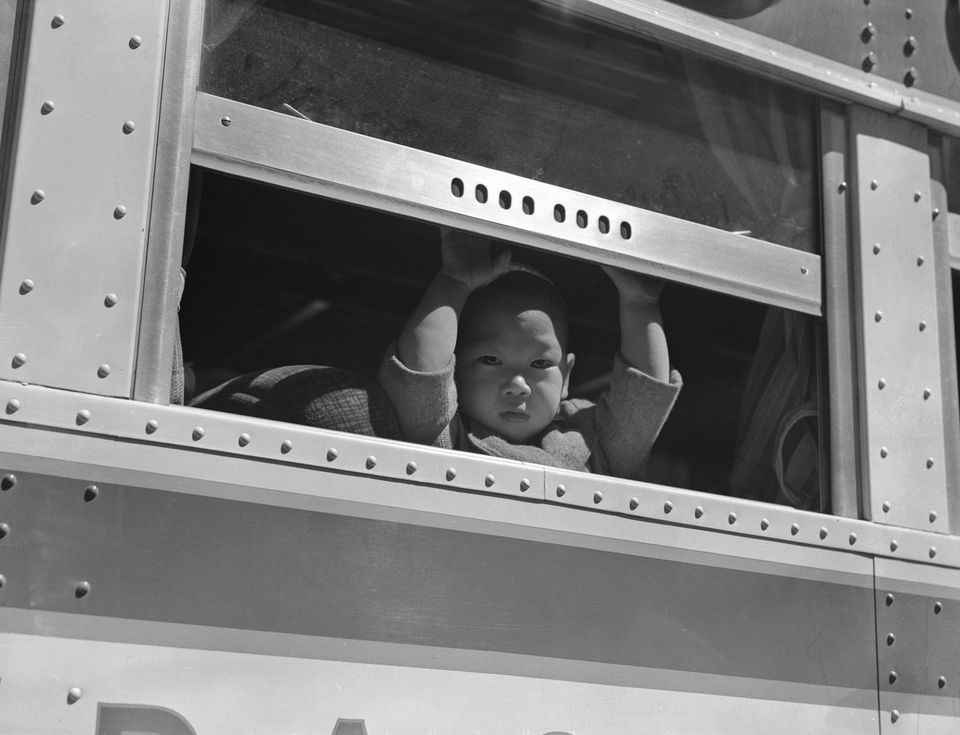
Photos courtesy of Dorothea Lange
TODAY
TODAY
The story of those who suffered through the World War II internment, and the decades of racial discrimination and prejudice against Japanese Americans that preceded it, has never been more relevant. Currently, we struggle with contemporary controversies surrounding immigration, domestic violence, terrorism, and civil liberties; the parallels between past and present rhetoric abound. It is important that we create archives that disseminate accurate, humanizing information about our nation’s past mistakes in order to spur conversation and raise important questions… How should individual rights weigh against national security? What characterizes a “real” American and the rights they possess? Do these rights change in times of fear? What type of rhetoric may lead to public support of removal of such rights for certain groups of people? What is our responsibility to citizens and immigrants who have been denied basic human rights?
Hateful rhetoric and discriminatory propaganda may be sensationalized and given credence by biased media or overzealous politicians, which can fog and contradict research and credible, evidence-based analysis. It is essential that this is kept in mind as we navigate such polarization. American citizens must be able to recognize their power in maintaining a culture of freedom and equality. This project has been an effort in the preservation of the human side to the World War II incarceration of Japanese Americans in order to promote a more critical evaluation of the current political climate and the importance of civic engagement and empathy going forward. Primary sources- art, objects, and photography- from the internment camps compose archives that accomplish the dissemination of this story. It is my hope that anyone who encounters this site will share the story of the survivors and initiate important conversations, whether it is with one’s own affected family or a related event of different circumstances. Specifically, I hope this collection of information, stories, and art reaches my own family, expanding our own archive and allowing us to understand our own family members.
Chambers, Tim. Anchor Editions. Anchor Editions, 2017, https://anchoreditions.com/blog/dorothea-lange-censored-photographs.
Accessed April 2019.
Densho. Densho: The Japanese American Legacy Project, 2017, https://densho.org/. Accessed Apr-May 2019.
Rubin, Joshua. “National Security Entry-Exit Registration System: Effective Tool Against Terrorism or Unnecessary Infringement on
Constitutional Rights?” Michigan State University College of Law, 1, 1, 2003, 17-23.